


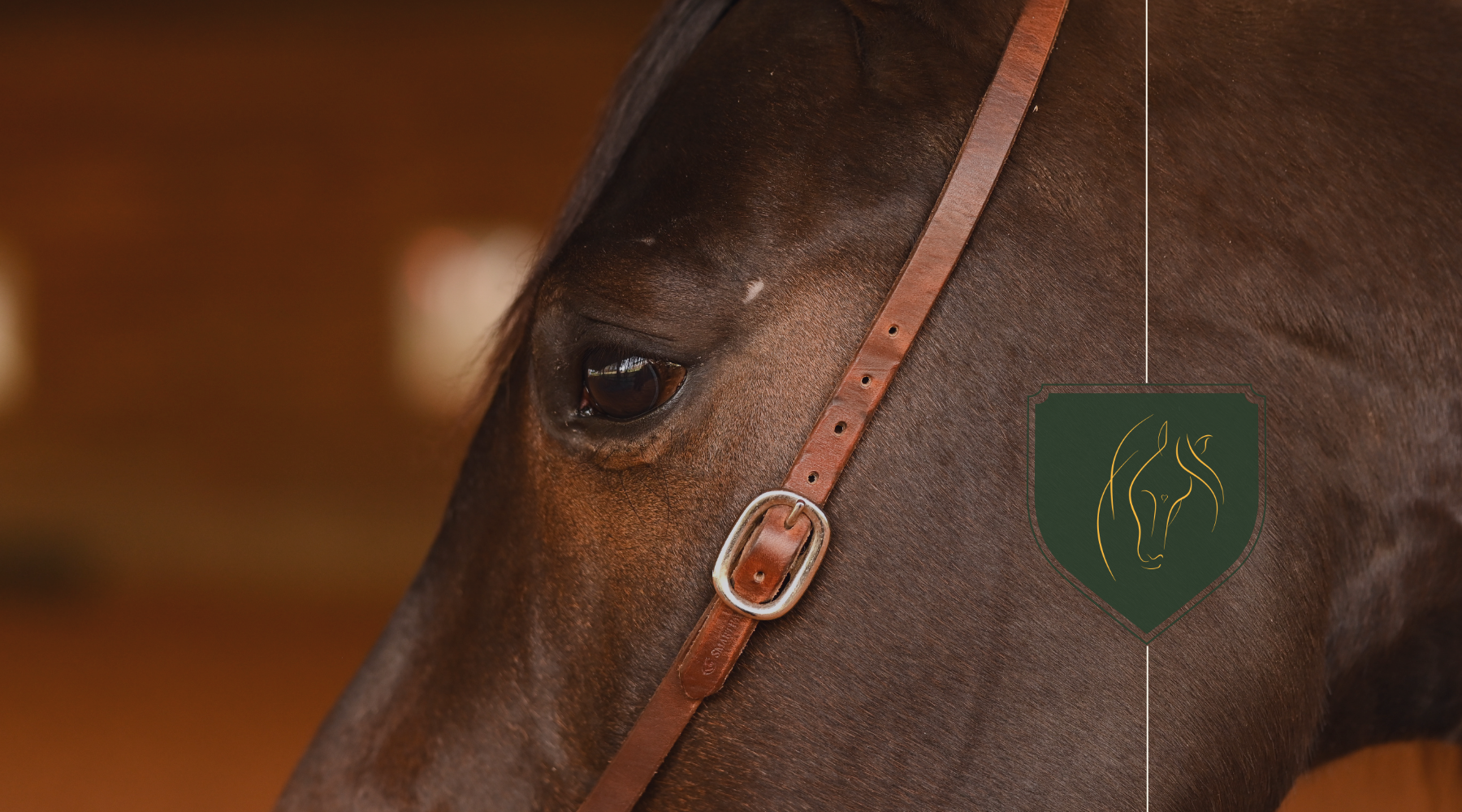
The Fascinating World of Equine Vision
Horses see the world very differently from humans, and understanding their vision helps both students and horse owners handle horses more safely and thoughtfully. Equine vision is a compelling subject for homeschool science because it blends anatomy, evolutionary biology, sensory perception and animal behavior.
Exploring how horses see is not just interesting trivia. It helps students understand why horses react the way they do, why they spook at small movements, why they tilt their heads to focus and why body language matters when interacting with them.
Anatomy of a horse’s eye
Horses are prey animals, and their eye placement reflects millions of years of evolutionary survival. Because their eyes are positioned on the sides of their head rather than the front, they can see nearly 350 degrees around them. This gives them a nearly panoramic view of their surroundings.
They use monocular vision when scanning the environment with each eye separately, and binocular vision when both eyes overlap in the forward viewing field to judge depth or distance. This makes equine vision excellent for detecting motion and potential threats, even when humans would notice nothing at all.
Students can easily observe how a horse might turn its head slightly to bring something into binocular focus. This is a great opportunity to discuss how animals adapt physically to their ecological roles.
Night vision and blind spots
Equine retinas contain a high concentration of rod cells compared to humans. Rod cells detect light and motion, which is why horses have strong night and dusk vision. Horses also have a tapetum lucidum, a reflective layer behind the retina that amplifies low light. This is the same structure that causes a horse’s eyes to glow in dim light or flashlight beams.
However, horses do have two important blind spots:
• directly in front of the forehead
• directly behind the tail
This explains why sudden movements behind a horse can startle them and why approaching head-on can momentarily disappear you from their view. Students can learn horse-safe handling by approaching from the side at the shoulder and speaking softly so the horse knows they are there.
This is an excellent homeschool discussion connecting anatomy, safety protocols and empathetic animal care.
Classroom and homeschool applications
- Compare visual field diagrams of humans and horses
- Conduct a peripheral vision test using simple field-of-view experiments
- Research predator vs prey adaptations in eye placement
- Discuss why horses need to be trained on both sides equally
- Explore how vision influences herd dynamics and social positioning
- Examine how eye structure relates to behavior and emotional responses
These activities make science learning practical and help students build observation and analysis skills.
Why equine vision matters in education
Equine vision is more than a novelty. It teaches students about:
- evolutionary adaptation
- biology of sensory systems
- animal perception
- behavioral science
- empathy in human-animal interaction
- safe handling and communication
Homeschool students who learn through horses develop both scientific knowledge and emotional intelligence. They learn not just how animals function, but why they react and how to interact respectfully with them.
Encourage students to share their newfound knowledge with others and apply it in real-world horse handling situations.
Leave a comment
This site is protected by hCaptcha and the hCaptcha Privacy Policy and Terms of Service apply.