



Texas TEFA Funds Can Pay for Equine Education: What Horse-Loving Students Need to Know
If your child received a Texas Education Freedom Account (TEFA) award for the 2026-27 school year, you now have real flexibility in how those funds get used. And if your student has a passion for horses, that flexibility opens a door most families haven't thought about yet.
The Equine Institute is a TEFA-approved vendor. That means Texas families can use their TEFA funds to enroll in our online equine science courses, whether you received the standard homeschool allocation or a higher award.
What Is TEFA and How Does It Work for Homeschool Families?
Texas Education Freedom Accounts give eligible families state-funded accounts to pay for approved educational expenses outside the traditional public school system. For homeschool students, TEFA provides $2,000 per child annually. Students with a documented disability and an IEP on file with the Texas Education Agency may qualify for significantly higher awards, up to $30,000 per year.
Approved expenses include curriculum, online courses, and educational programs from approved vendors. The Equine Institute is an approved vendor through the Odyssey platform, meaning our courses are eligible for direct payment through your TEFA account.
Funds are distributed quarterly beginning July 1, 2026 and roll over if unused, so there is no pressure to spend everything at once.
Why Equine Science Makes Sense as a Core Curriculum Subject
Horse-loving students are often extraordinarily motivated learners, and motivation is the single biggest driver of academic retention. When a student is passionate about what they are studying, they read more carefully, retain information longer, and apply concepts naturally in the real world.
Equine science isn't a hobby subject. It's a legitimate academic discipline that covers biology, anatomy, physiology, nutrition, animal behavior, chemistry, business, and veterinary medicine. A student working through our curriculum is building real academic skills in real scientific content while doing something they love.
For families who struggle to keep a reluctant learner engaged, equine science is one of those rare subjects that tends to make students want to do the work.
A Curriculum That Can Carry a Student From Middle School Through High School
Our course library was built to grow with a student over time. A motivated middle schooler can begin with our foundational courses covering horse breeds, equine physiology, anatomy, first aid, and nutrition, then progress steadily into more advanced clinical and career-focused content through high school.
This is not a one-semester program. A student who starts at age 12 and works through the full curriculum will have covered the equivalent of a serious pre-veterinary and animal science education by the time they graduate. That depth of knowledge is something colleges, veterinary schools, and equine employers notice.
All courses come with lifetime access. There are no annual renewal fees, no subscriptions, and no expiration dates. A course purchased this year will still be accessible five years from now. For homeschool families building a long-term educational plan, that matters.
For homeschool families building a transcript, our courses translate naturally into science and elective credit hours. Equine anatomy, physiology, nutrition, and veterinary science map directly to life science and biology credit requirements, while our career track courses work well as elective credits in agriculture, animal science, or vocational education. Several of our courses also support hands-on lab hour requirements. Because our content is delivered as structured, documented curriculum with assessments and defined learning objectives, families can supplement coursework with hands-on hours spent working with horses, whether at a local barn, therapeutic riding center, or through a 4-H or FFA program, and document those hours alongside our coursework to satisfy practical lab requirements. If you are working with an umbrella school or a co-op that requires documentation of credit hours, we are happy to provide course outlines and learning objectives to support your record-keeping.
Career Paths That Open Up Through Equine Education
One of the most important conversations to have with a horse-passionate student is that there are more career paths in this industry than they probably realize. The equine world is large, professional, and growing, and it rewards people who combine genuine knowledge with hands-on experience.
Our curriculum is structured around real career tracks, including:
Veterinary Assistant: Students build a foundation in physical examination, patient care, lameness evaluation, hematology, pharmacology, and equine dentistry before working through a full case study series covering vision, cancer detection, neurological disease, shoulder injuries, and infectious disease. This is rigorous, clinically-grounded content developed by practicing equine veterinarians.
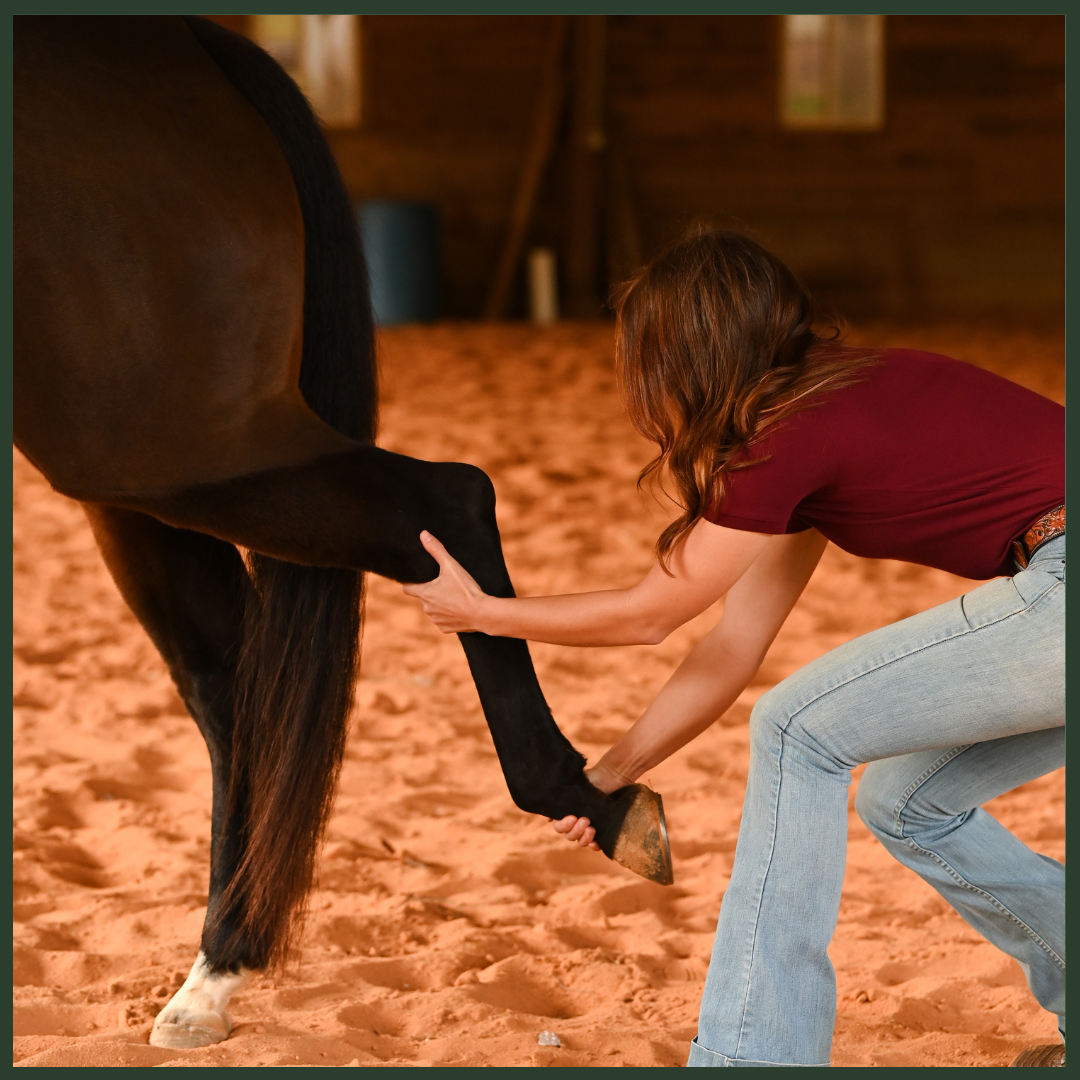
Farrier Assistant: Covering hoof anatomy, equine conformation, biomechanics, musculoskeletal disease, and lameness fundamentals. Students interested in working alongside farriers or pursuing farrier certification have a strong knowledge base to build from.
Barn and Facility Management: Practical, applied content covering facility management, parasitology, infectious disease prevention, physical examination basics, nutrition, and hoof care. This is the track for students who want to work in professional stable environments, breeding operations, or therapeutic riding programs.
Bodywork and Rehabilitation: An emerging and in-demand field. Our bodywork track covers equine anatomy, conformation, biomechanics, fascial integration therapy, laser and light therapy, and contraindications for bodywork. Students interested in equine massage, rehabilitation, or complementary therapies will find a serious professional foundation here.
These aren't aspirational categories. They are real jobs that real people build real careers around. The equine industry employs veterinarians, vet technicians, barn managers, farriers, trainers, rehabilitation specialists, nutritionists, and more. A student who enters any of these fields with solid academic knowledge stands out immediately.
Supporting Students with Learning Differences
We believe every student who loves horses deserves access to this content, regardless of how they learn best.
For students who benefit from audio-based learning, all of our course content is available as text that can be uploaded directly into text-to-speech applications such as Natural Reader, Voice Dream Reader, Microsoft Immersive Reader, or any other preferred tool. This allows students to listen to lessons in addition to or instead of reading them, without losing any of the content or context.
For families navigating dyslexia, auditory processing differences, ADHD, or other learning profiles, this flexibility means the curriculum adapts to your student rather than the other way around. We are happy to discuss how our content works with your student's specific learning needs directly.
Students receiving higher TEFA awards through the IEP pathway will find that our curriculum pairs naturally with a wide range of learning approaches, and that equine science tends to reach students who have struggled to connect with traditional academic content.
How Texas Families Can Use TEFA Funds with The Equine Institute
The process is straightforward:
- Log into your Odyssey account at educationfreedom.texas.gov
- Search for The Equine Institute as an approved vendor
- Select the courses or program that fits your student's goals
- Complete the purchase through your TEFA marketplace
If you have questions about which courses to start with, how to build a multi-year curriculum plan, or how our content works for a student with specific learning needs, reach out to us directly at info@equineinstitute.org. We are happy to help you build a plan that makes sense for your family.
Funds are available beginning July 1, 2026. If your student received a TEFA award, now is a good time to start planning for the fall.
A Note for Families Still Waiting on TEFA Awards
In the meantime, our courses are available for direct purchase at equineinstitute.org and are priced to be accessible for families investing in their student's education outside of TEFA as well.
The Equine Institute offers online equine science education developed by practicing veterinarians and equine professionals. All courses include lifetime access and are designed for students at every level, from first-time horse owners to students pursuing professional careers in the equine industry. Approved vendor for TEFA (Texas Education Freedom Accounts).

%20award%20for%20the%202026-27%20school%20year,%20you%20now%20have%20real%20flexibility%20in%20how%20those%20funds%20get%20used.%20And%20if%20your%20student%20has%20a%20passion%20for%20h...)
Leave a comment
This site is protected by hCaptcha and the hCaptcha Privacy Policy and Terms of Service apply.